
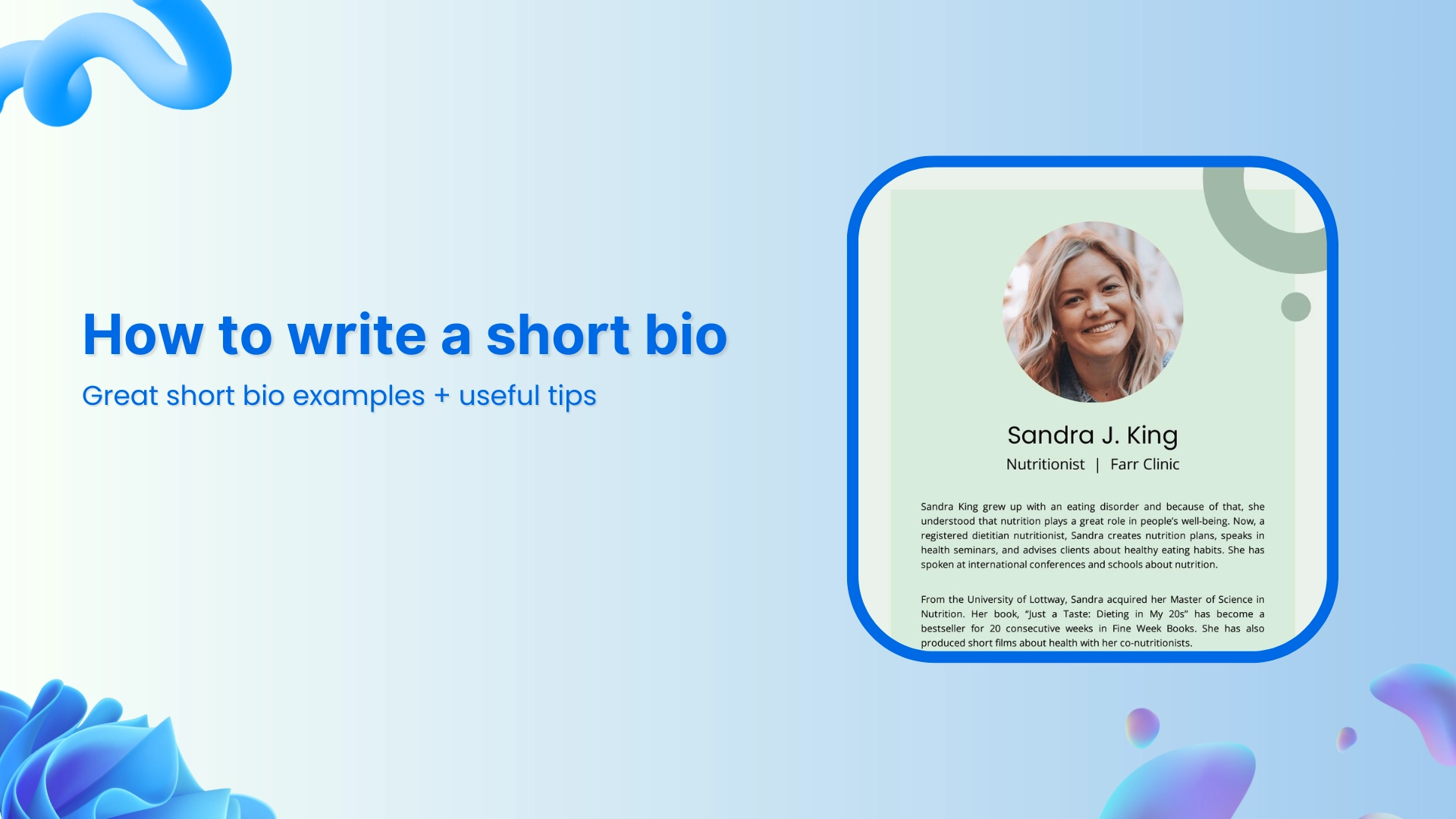
Most bios miss the mark for one basic reason – they’re packed with words but short on meaning. A couple of generic labels, a borrowed line, and a row of emojis can make profiles blend into one another. When people scan in seconds, that sameness hurts. Trying to squeeze identity into a tiny space pushes many users toward “safe” phrases that don’t say anything real. Even specific interests, like keeping up with an ipl betting online app during big matches, often get flattened into bland shorthand. A minimalist bio works only when every word earns its place.
A good bio isn’t meant to win over everyone. It’s there to feel authentic to the right audience. That takes clear choices, not extra fluff.
Why most bios feel identical
Generic bios are rarely lazy. They are cautious. Words like “dreamer,” “hustler,” or “content creator” feel safe because they offend no one. Unfortunately, they also say nothing specific. When many people reach for the same descriptors, profiles lose distinction.
Copy-paste culture amplifies the problem. Trend-driven phrases spread quickly through templates and caption lists. Algorithms reward familiarity, so repetition feels validated. The result is a sea of bios that look polished but interchangeable.
Skimming behavior makes this worse. Bios are not read line by line. They are scanned. When the first words feel predictable, the rest is ignored. A minimalist bio must earn attention immediately. Familiar language cannot do that.
The core building blocks of a strong minimalist bio
Effective bios are built, not stuffed. They rely on a small set of elements that work together.
The first is a clear identity marker. This is not a job title in the abstract. It is a concrete role or focus that can be visualized. “Street photographer” communicates more than “creative soul.”
The second is a proof point. This can be a detail, habit, or constraint that suggests real activity. It does not need numbers or claims. It needs specificity. A location, a tool, or a format often does the work.
The third is a direction line. This tells a visitor what the account is about now. It frames expectations without selling. Direction beats ambition in a limited space.
Minimalism works because it forces choice. Choosing what stays automatically improves what remains.
Micro-writing tactics that add personality without extra length
Small writing decisions make a large difference in how a bio feels. Precision replaces decoration. Structure replaces clutter.
Specific nouns outperform broad adjectives. “Match analysis” signals more than “sports fan.” Line breaks matter because most bios are viewed on phones. White space guides the eye. Searches suggest that consumers have started to choose more selectively how they use online entertainment. People nowadays change their reading of a 2, 000-word article to watching a short video, getting live updates, or reading a quick recap, depending on their mood and how much time they have.
Practical micro-tactics that consistently improve clarity include:
- Replace adjectives with activities or formats.
- Use one concrete noun that anchors meaning.
- Limit emojis to one functional role or remove them entirely.
- Break lines to separate identity from direction.
- Avoid stacked labels that compete for attention.
- Keep capitalization consistent for readability.
These changes do not add length. They add a signal.
Common mistakes that make bios look spammy or fake
Overpromising is the fastest way to lose credibility. Claims that sound like ads trigger skepticism. A bio is an introduction, not a pitch. Trying to be everything creates doubt about whether anything is real.
Another mistake is overcrowding. Too many emojis, hashtags, or links make a profile feel transactional. The bio becomes a billboard rather than a human signal. When every character is optimized for reach, authenticity disappears.
Quotes are risky. Popular lines are instantly recognizable and often disconnected from the account. Without original context, they feel borrowed. Trends change quickly. A bio built on trends ages faster than one built on substance.
Spam signals are subtle. Excessive punctuation, forced urgency, and exaggerated promises all contribute. Minimalist bios reduce these risks by limiting surface area.
A fast system to refresh a bio without losing authenticity
Refreshing a bio does not require reinvention. It requires editing with intent. The first step is a short audit. Each line should answer a different question. Who is this? What happens here? Why now.
Remove anything that repeats meaning. If two words say the same thing, keep the stronger one. Replace abstractions with actions. If a line cannot be visualized, it is probably too vague.
Seasonal updates work better than constant changes. A bio can evolve with projects, interests, or timing without losing its core. Consistency builds recognition. Minor adjustments keep it relevant.
Alignment matters. The bio should match captions and pinned content. When the bio promises one thing, and the feed delivers another, trust drops. Minimalist bios succeed because they set accurate expectations.